Thursday, September 30, 2010

Pain And Bump On Illiac Crest

A visual overview of plate tectonics

We saw in these days The rugged terrain and theory of plate tectonics , with the limitations of the book's illustrations, so we will use this small space to include some links to animations and presentations that will allow us to understand better the effects of plate movements and how it affects the topography of the Earth.
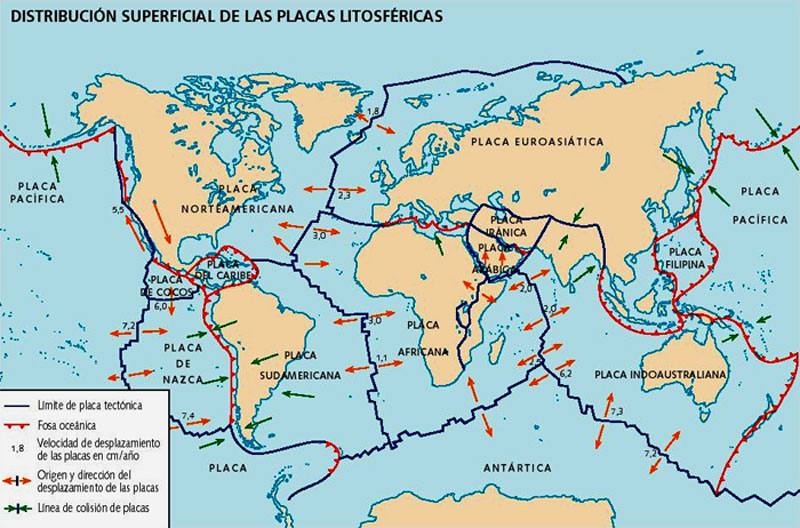
Planisphere with the division of the earth's plates, direction of motion, speed and collision zones (image obtained from astroyciencia.com)

As we discussed the origin of theory were Wegener studies on drift continenta the early twentieth century, showing the movement of continents, but until mid-twentieth century were not answered all the unknowns, explaining the effects of the division of lithosphere large plates that move over the surface layer of mantle.

Some animations that show examples of how to act plates and their effects on the formation of relief by clicking on the links (they are in English but the pictures are very clear):

divergent Borders forming an oceanic ridge : the plates are separated and creating new ocean crust under the edges

converged creating a coastal mountain range: a fascia ocean sinks (destroying bark) under the other plate and stand (appearing a mountain range and associated with volcanic areas)

You can see other animations on the following website:
http://www.juntadeandalucia.es/averroes/manuales/tectonica_animada/tectonanim . htm

To follow a full analysis of the tectonic plates in the following format (it is extensive, as it is raised to 4 pupils) Presentation Plate Tectonics (Pablo Fernández Moreno)

A simple animation of plate tectonics and one of its effects more catastrophic: the earthquake s

Other known effects of plate tectonics is the volcanic activity that is associated with:
Court
a typical volcano with major elements (image obtained from defensacivilmaimon.wordpress.com)

have recently recorded the closest images of a volcanic magma (the Maroum) for a documentary directed by photographer Geoff Mackley are impressive.

Friday, September 17, 2010

Creating Audit Cmmi Checklist

Tut's tomb : a unique opportunity 30s

Playing the solid gold funerary mask of King Tut (1336-1327 BC)

this summer (it will be until October) , I have enjoyed in Madrid in one of the most interesting exhibitions I've ever seen: the recreation of the most famous pharaoh's tomb (not the most important) of history, Tutankhamun , as found by the Egyptologist Howard Carter in 1922, when he said see wonderful things.


The patron Lord Carnarvon excavation could not wait, we ate at the anxiety and nervous Carter had asked about what could sense, through ; the wall, in the light of a candle, in the newly found tomb KV62 in the Valley of the Kings . I never seen it, one of the key moments of archeology: the first and only pharaonic tomb found without being sacked, as was left more than 3300 years ago by the ancient Egyptians.

objects stacked on the sides, messy, but intact, even with organic waste from the food left for the dead pharaoh could eat in the afterlife, a collection of invaluable, many gold-coated parts (some gold as one of the sarcophagi or funerary mask of the first picture), ivory, lapis lazuli, rubies and gems of all kinds, precious woods such as ebony or cedar brought from Lebanon, etc.

Canopy gold surrounded by goddesses within the canopic jars with the pharaoh bodies

The statements in the House are re-creations, as originals are in the Egyptian Museum Cairo, but better! because they are faithful reproductions of all the pieces found, made by craftsmen using techniques and materials similar (obviously not with gold or gemstones, but gives the hit perfectly) and therefore no wear and tear on materials, inevitable for so long, despite the closed atmosphere of the tomb.

Small statues of the pharaoh in various activities (fishing, topped ...) and gods
But the visit to the tomb of the living image of Amun (meaning the name of Tutankhamun) is not just a collection of objects, is a careful walk through the history of Egypt's New Kingdom and XVIII dynasty. Starting with a geographic context and hitórico to continue with a sculpture gallery, adorned with visual, concise and informative panels all helped by a clear audio guide.

Anubis acompaña al faraón que recibe un anj (llave de la vida) de la diosa Isis

Posteriormente se visita la recreación en sí de la tumba, en una atmósfera que ayuda a aumentar el misterio, se recorren las pequeñas estancias que conformaban esta modesta tumba, realizada apresuradamente para un faraón joven (sólo 19 años) que murió prematuramente. ¡Imaginad cómo pudo ser la tumba de Ramses II que reinó más de 60 años...!

 Sarcófagos gold where it lay wrapped in bandages mummy of Tutankhamun

Finally on the top floor presents all the parts: coffin, coffins covered with gold (there were up to 3 within each other), statues of the pharaoh and gods, cars for hunting or warfare, furniture (especially nice for its decor and technical expertise) and everyday objects of all kinds, with its accompanying explanation of its features and function.


is an opportunity not to be missed if you want to know a bit of history and more specifically, the Egypt of the Pharaohs at the height of their civilization. Also let you take pictures without flash (all item pictures I made with the phone and know it), so you can come in handy for jobs that you can send.

Sandals and gold thimbles pharaoh. These feet were really well looked after!

The following articles discuss some aspects of Egyptian civilization, as their religion, writing, art ...

To inform you about the visits to the exhibition, prices, etc. Go to the website http://www.tutankhamon-madrid.es/

Photos Juanjo Martínez